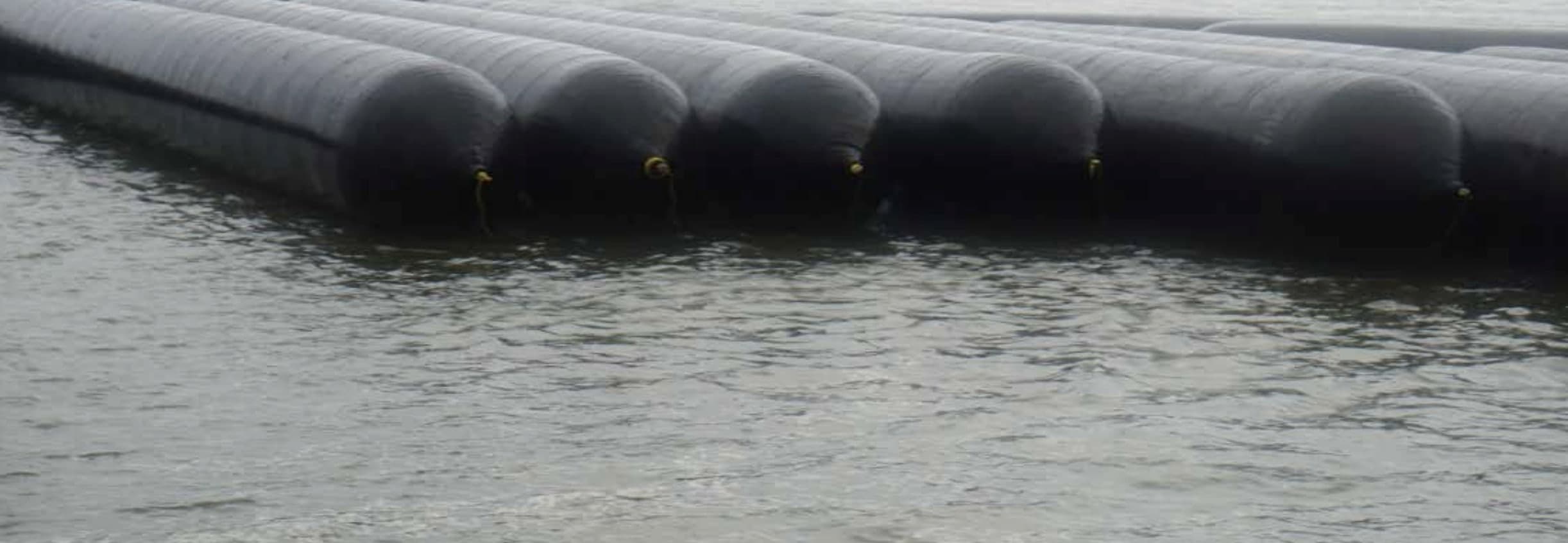
A field-repair overview for marine rubber airbags — assessing damage, sanding to the cords, patching and vulcanising a leak back to working condition.
When a leak can be repaired
A ship launching airbag is a multi-layer, nylon-cord-reinforced rubber cylinder, and a small leak does not mean the end of its service life. Before repairing, inspect the rubber for serious aging — fatigue fracture or a sticky surface. If the rubber has aged badly, a patch will not last and the airbag should be retired; if not, and the damaged area is not too large, it can be repaired and returned to service.
Work in a clean, dry, protected location. The airbag must be fully clean and dry before any adhesive is applied.
The patch-and-vulcanise process
Mark the damaged zone generously and sand it back until the reinforcement cords just show — without cutting the cords themselves. Long cracks are first stitched with cord to hold the wound closed. The area is then cleaned and coated with a rubber solution, and fresh raw-rubber layers are built up — alternating cord angles, each layer overlapping the last — with the number of layers set by the size of the damage.
Finally the repair is vulcanised under heat and pressure (around 150 °C) and allowed to cool gradually before the airbag is re-inflated and leak-tested. Done correctly, the repaired section performs like the original.
