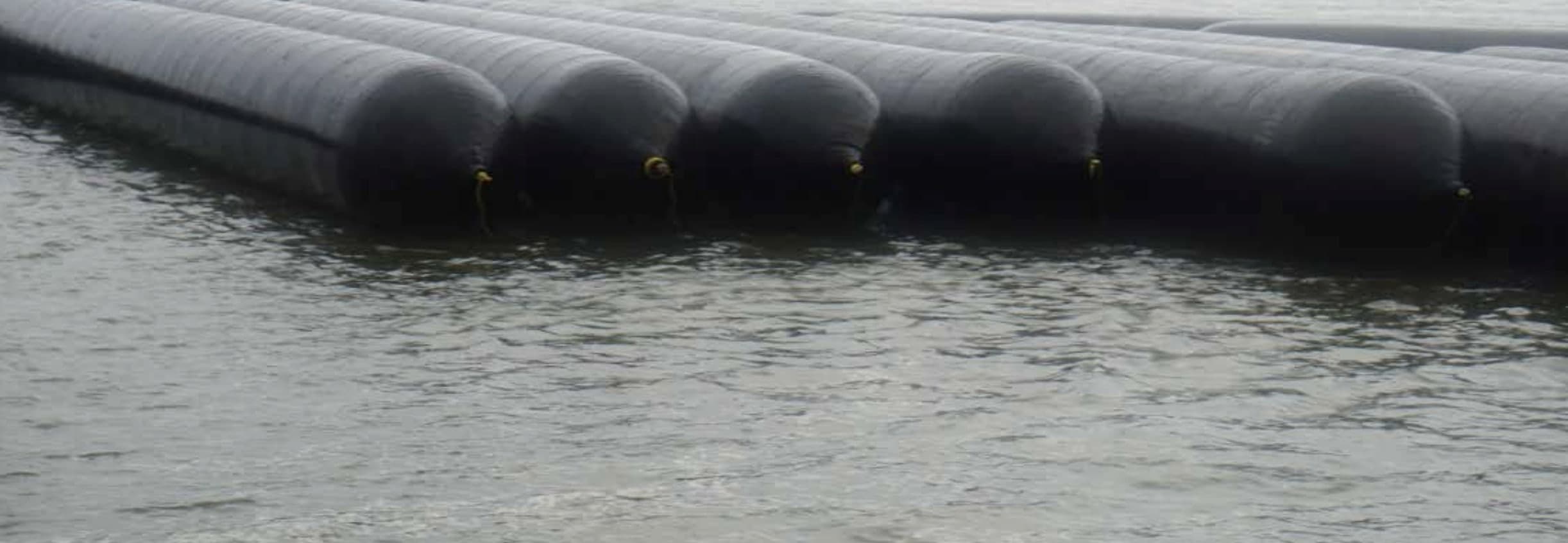
A rubber airbag is not priced like a commodity. Diameter, layer count, quantity and certification move the number far more than the rubber itself — here is where the money actually goes.
You are paying for layers, not rubber
Two airbags of the same diameter can differ in price by half, and the reason is inside the wall. Bearing capacity and the bursting-pressure ratio come from the number of nylon-cord-reinforced ply layers and how they are wound — not from the thickness of the outer rubber. A 1.5 m airbag rated for a genuine 3.0× burst margin simply has more plies than a thin-walled one that quotes the same diameter and a lower price.
So when a quote looks cheap for its size, ask for the ply count and the rated working versus bursting pressure. That single question separates an airbag built to ISO 14409 from one that only looks the part.
Quantity and paperwork are half the invoice
The number of airbags comes out of the sizing calculation for your vessel — launch weight, contact length, safety factors — and it always includes at least one spare in the working set. Trying to shave the count to save money is the most expensive false economy in the yard; a launch does not pause when an airbag is questionable.
Then there is the documentation: material and pressure test certificates, and where a classification society witnesses the launch, third-party inspection. It adds to the quote and it is worth every cent when the hull is already moving.
Judge cost per launch, not sticker price
A good set of airbags is reused across dozens of launches, so the honest figure is cost per launch, not the price on the pallet. Spread over its service life, a properly built airbag that never fails is cheaper than a bargain one you replace early — or worse, one that lets a hull down.
Budget the whole system too: air compressors, inflation hoses, a pulling winch and a trained crew. The airbags are the visible line item; the launch is the thing you are actually buying.