
Ever wondered how a ship gets launched?
How rubber airbags roll a hull off the slipway, how pneumatic fenders soak up a berthing, and the standards behind them — explained with real specifications for the equipment that moves and protects vessels.
- ISO 14409
- Ship launching airbags
- ≥3.0×
- Burst : working pressure
- ISO 17357
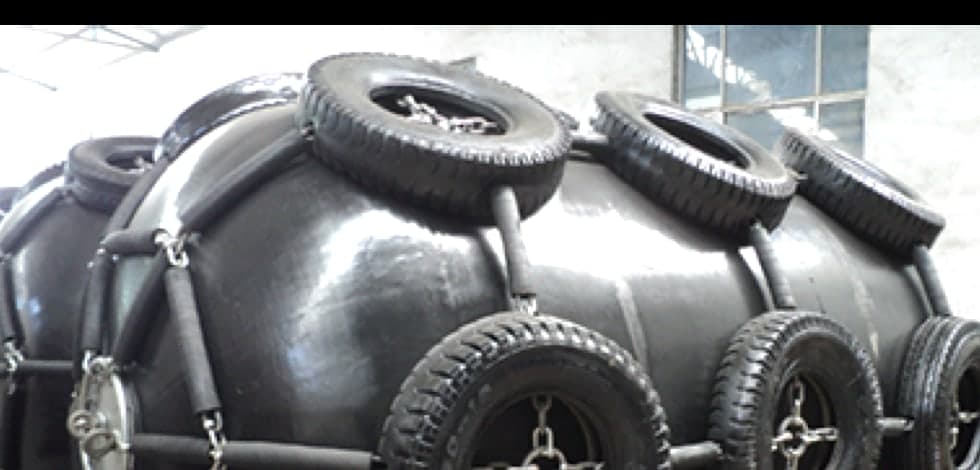
- Pneumatic fenders
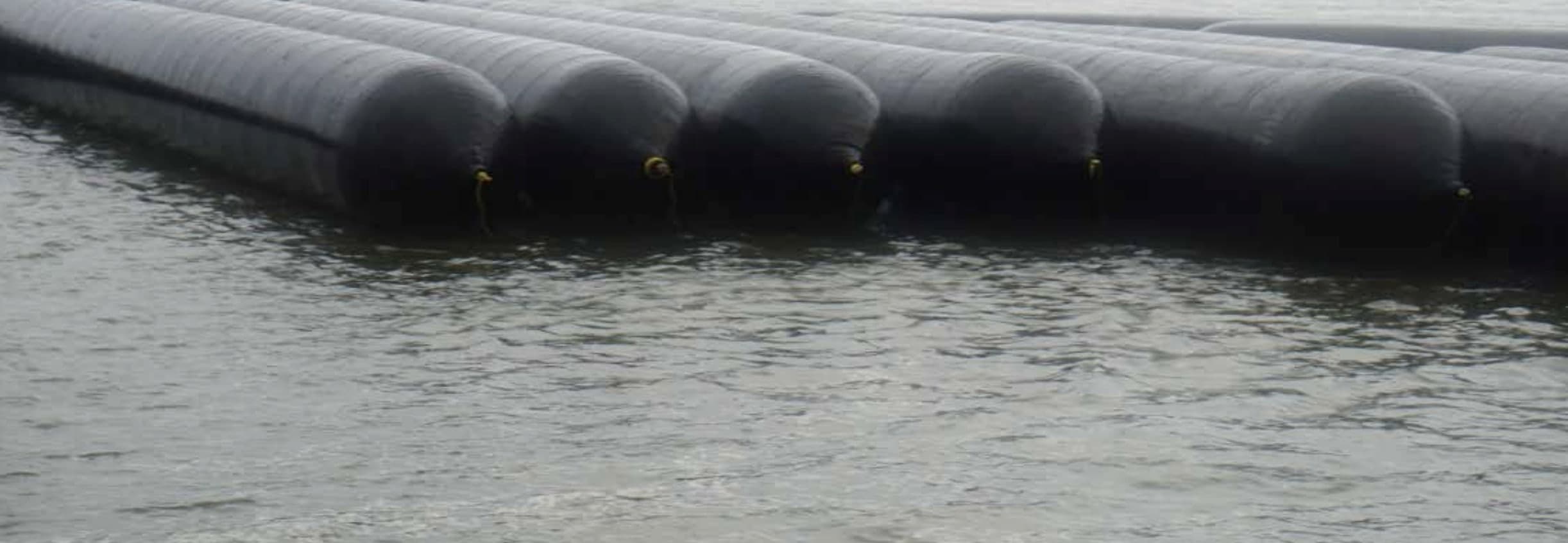
What is a ship launching airbag?
A ship launching airbag is an inflatable cylinder of multi-layer, nylon-cord-reinforced rubber with tapered point-ends and an air inlet valve. Laid in rows beneath a hull and inflated, a set of airbags behaves like a bed of rolling bearings — the vessel rides on air rather than on a fixed cradle.
Launching, berthing & mooring gear
How an airbag launch works
Position
Airbags laid in rows beneath the hull along the slipway centreline.
Inflate
Bags pressurised to the calculated working pressure; the vessel lifts off blocks.
Roll
Progressive deflation lets the hull roll seaward on the airbags as bearings.
Float
The vessel reaches buoyancy and floats free — a controlled soft launch.
A launch is only as safe as its calculation. The right airbag count, the right pressure, the right standard — everything else follows.
ISO 14409 · ISO 17357 · PIANC 2002
Sizing a launch or a berth?
Send the vessel data — DWT, dimensions, slipway angle or berthing energy — and get the relevant specifications back.