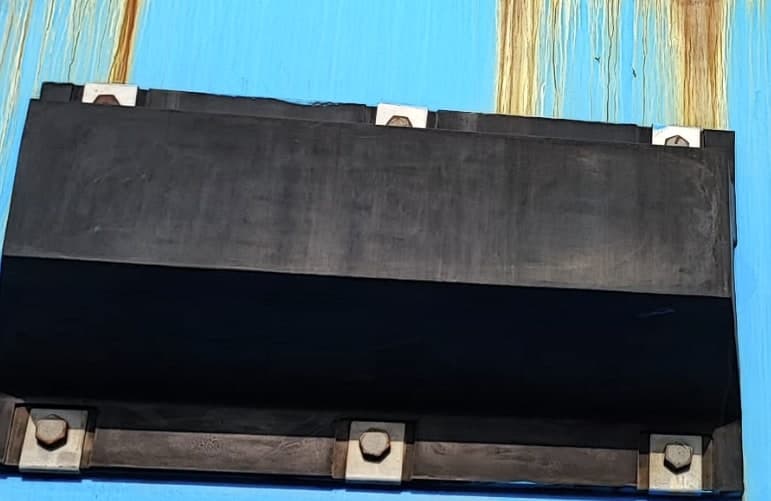
The right fender is a property of the berth, not the catalogue page. Vessel range, tide, approach angle and how often ships call decide more than the fender's headline energy rating.
Match the fender to the berth, not the catalogue
Selection starts with the berth's real duty: the smallest and largest vessels that will actually call, the tidal range they arrive across, the angle and speed of a typical approach, and how frequently. A fender that is perfect for a fully loaded tanker can crush a light-ship coaster arriving at low water — and the same berth often has to serve both. Write that envelope down before you open any product page.
The energy–reaction–deflection triangle
Under ISO 17357 you are balancing three things at once: the energy the fender must absorb, the reaction force it sends into the hull and the quay, and the deflection — the standoff — it needs to do it. Push absorption up and reaction tends to follow; add diameter or a fender panel and you spread the load. Floating fenders (pneumatic and foam) suit tidal and ship-to-ship work; fixed fenders on a panel suit a quay wall with a steady waterline. The berth's structure and tide usually pick the family before the energy sum picks the size.
The mistakes that show up years later
Three errors recur. Sizing for the average vessel instead of the demanding extreme — the light ship at low water, or the occasional oversized caller. Ignoring the approach angle, so a fender rated on a square hit meets the hull on its corner. And forgetting the steel: chains, shackles, anchor points and panels corrode on a schedule of their own, and a fender is only as reliable as its weakest fitting. Specify those to the same standard as the rubber and the berth stays protected long after commissioning.